

Deepfake detection & scam prevention
Know when a face, voice or document is fake.
Scam AI checks photos, video, voice and documents for AI manipulation and forgery, and gives a plain verdict with the evidence behind it: at onboarding, in claims, or live on a call.
- passport.jpg✓ Likely real
- payslip-may.pdf✓ Likely real
- support-call.wav✓ Likely real
- selfie-video.mp4! Likely AI
Strong signs of AI generation or manipulation were found.
Trusted by
























Built by a team from Duke University and UC Berkeley.
How we vet candidates and claims with TinyFish →Watch it work
Sounds real. Scan says no.
voice check2 callers · 1 is real
Listen to both callers. Which one is a real person?
Caller A · 0:11
Caller B · 0:12
Show the answer
Generated by an AI voice model from a line we wrote.
A person reading (LibriSpeech, CC BY 4.0).
Caller A is a cloned voice. Scam AI flagged it as AI-generated across the whole clip and passed caller B.
Voice, images, video and documents go through the same check, and come back with a verdict.
See what Eva checksWhy Scam AI
AI is so real, eyes can't catch it
Detection can. One engine — Eva V1.6 — across every surface fraud shows up on.
AI-generated images
check-if-ai6 images · 6 flagged
 Midjourney 6AI
 GPT-4oAI
 Gemini 2AI
 Firefly 4AI
 Grok 2AI
 DALL·E 3AI
No camera took any of these. Each came from a different image generator, and Scam AI flagged all six.
From our detector's test set.
Fully synthetic photos read as real to people. Eva V1.6 is the AI image detector that reads the pixels.
- Pixel-level generation artifacts, invisible to people
- Photos, profiles, and claims media
- Shareable stamped verdict cards
Deepfakes
deepfake scan · video12 s · scored per frame
 ! DEEPFAKE0:06 / 0:12
0:00our score, frame by frame0:12
A face that never existed, played as a webcam feed. Scam AI scores every frame of the video, and this one reads fake from start to end.
The face passes every eyeball check. The scan reads what eyes can't.
- Face-swap boundaries and generation artifacts
- Liveness and presentation-attack checks
- Frame-by-frame scores, recorded or live
Forged documents
document checkpay stub · 1 page
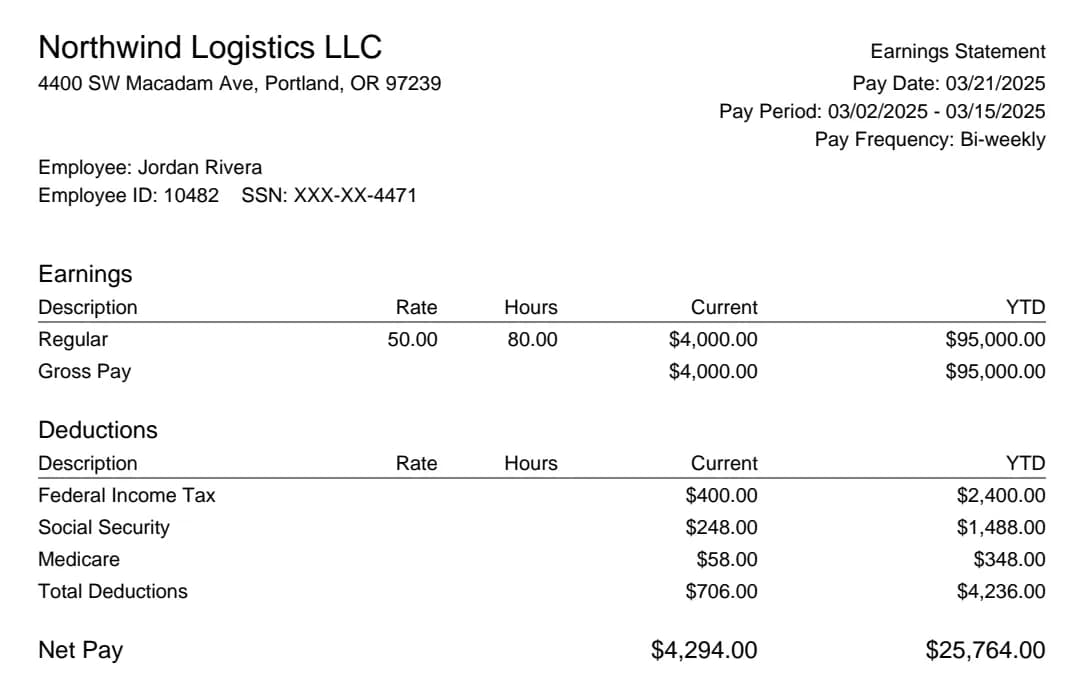
! FORGED Net pay does not add up: $4,000.00 gross minus $706.00 in deductions is $3,294.00, not $4,294.00.
A test pay stub we built and then edited; Northwind Logistics is made up.
Pay stubs, bank statements, and claims paperwork — doctored regions flagged with the score.
- Region-level forgery localization
- Template and amount tampering on statements and IDs
- Evidence attached to every verdict
Live meetings
halo · on-devicelive call
“CFO” · remote! HALO · LIKELY SYNTHETIC

Halo marks a face that is not real while the call is still on, on the laptop, in Zoom, Teams or Meet.
Illustration: the caller is an AI-generated face.
Halo watches the call and flags the synthetic participant while the meeting is still happening.
- Runs on-device, in real time
- Flags synthetic video mid-call
- Nothing is recorded or stored
Identity in claim files
pii-zero · offlinebefore / after
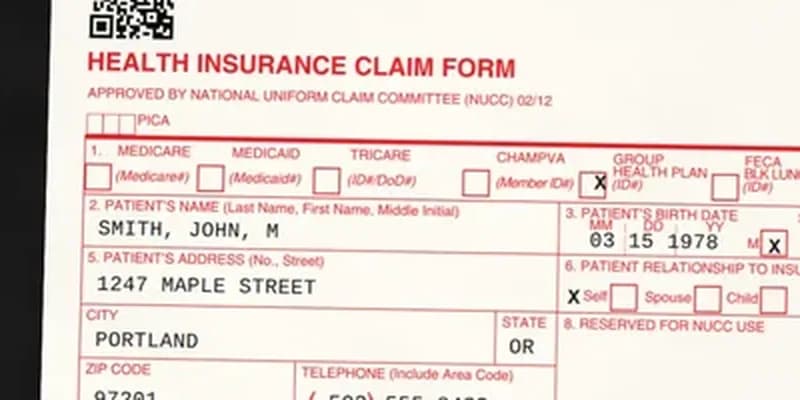
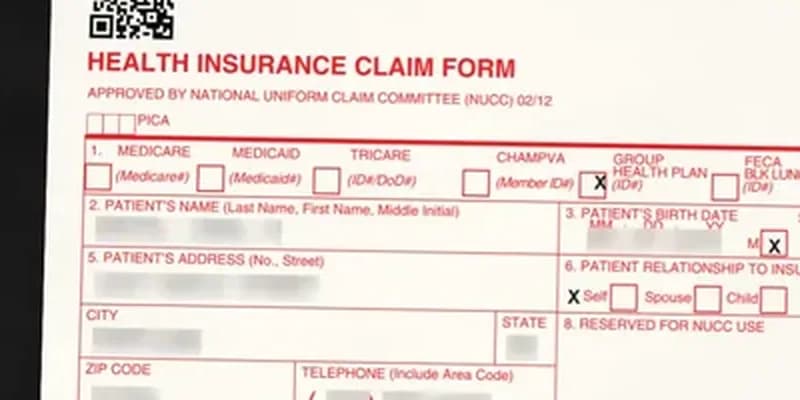
REDACTED Name, birth date and address are blurred on the device before the claim file moves anywhere.
PII Zero's own output on a sample claim form.
Claim files carry more identity than a face. PII Zero blurs names, faces, plates and account numbers in documents, photos and video before a file moves.
- Tracked frame to frame, re-read to prove nothing survives
- Re-scanned after redaction: residual PII counted
- Runs on-prem or fully air-gapped
The stakes
$25M
Stolen in one call · Arup · 2024
Everyone on the video call was a deepfake, except the victim
A fake on a live call has to be caught while the call is still on.
Eva V1.6
One detection model, trained on real attacks
Eva V1.6 Detection Model is trained on real attack media, not academic benchmarks, and retrained as new generators appear, so detection tracks the threat.
One platform, every team
Point, or build.
For teams
Check media in the dashboard
Upload an image, get the verdict, keep the receipt — every run logged with model, evidence, and cost. Prepaid credits, no contracts to start.
For developers
One call from your stack
One REST endpoint for every model, SDKs for Node and Python, and an MCP server so your agent can verify media mid-task.
POST api.scam.ai/v1/detections · file=@selfie.jpg
Safety & security
Built to be audited
SOC 2 Type II
The detection pipeline is independently audited, so security controls are verified, not asserted.GDPR
Data processing is GDPR compliant. Your media is processed for detection, and every verdict carries the score behind it and a plain-English summary.C2PA member
Scam AI is a C2PA member, contributing to open content-provenance standards alongside detection.Cloud or on-prem
Run detection in our cloud or on your own infrastructure; the pipeline stays inspectable either way.
Ask your AI
Don't feel like scrolling? Ask your AI.
The whole site is mapped for agents. Point ChatGPT or Claude at our llms.txt and it can explain every product and use case — or wire in the MCP server and your agent can verify media itself, mid-task.
Read https://scam.ai/llms.txt and tell me how Scam AI fits my stack.mcp · scam.ai/mcpagent
Checkedinvoice.png
Amount$8,140.00
Amount fieldre-typed
Agent actionpayment held
FAQ
Some frequently asked questions.
Q.What can Scam AI actually detect?
Scam AI detects deepfaked faces, face swaps, and fully AI-generated images and video. It also catches forged and tampered identity documents — including template-generated and synthetic IDs — manual edits and splices, and device-level attacks like virtual cameras and injection attacks that defeat naive selfie checks. One engine, the Eva V1.6 Detection Model, covers onboarding selfies, identity documents, claims media, live video meetings, and user-generated content.
Q.How accurate is it, and what about false positives?
Detection is probabilistic, not a yes/no: the Eva V1.6 Detection Model returns a tiered likelihood result — likely real, alert, or likely AI — with the score behind it and a plain-English summary of what it found. You set the thresholds — auto-decline, step-up, or human review — and tune them per flow: stricter for high-value wires, looser for routine account changes. You control the false-positive/false-negative trade-off, not a vendor's fixed cutoff. Eva V1.6 is retrained as new generators appear, so accuracy tracks the current attack landscape, not a frozen benchmark.
Q.Can it work in real time, including live calls?
Real-time detection is what Halo, Scam AI's meeting product, is built for. Halo runs deepfake detection on-device during live video meetings and flags a deepfaked face or manipulated feed while the call is happening, and because analysis stays on your machine, meeting video never leaves it. For application flows, the REST API offers real-time latency for live onboarding and step-up checks, plus batch endpoints for media libraries and claims backlogs. A face-swapped selfie gets declined before the account exists.
Q.Can detection run without sending media to Scam AI?
Yes. Halo analyzes meeting video on-device, so that media never leaves your endpoint at all. For data-residency or no-egress requirements, on-prem and private-cloud deployment keep media, results, and logs entirely inside your own perimeter.
Q.How do you keep up with new deepfake generators?
New face-swap and diffusion tools appear constantly, so Eva V1.6 trains on real attack media — actual fraud attempts, not academic datasets — and retrains as new generators show up in the wild. The team publishes original research — papers and open datasets on deepfake detection, document forgery, and adversarial attacks on age-estimation systems, with named authors on arXiv — and studied techniques become detection signals. Ask any vendor when its model was last updated, and against what.
Q.How does it integrate with our stack?
Integration is one REST API: send video, images, or audio; get back a verdict, the score behind it, and a plain-English summary of what was found. Drop it into your existing decision point — onboarding/KYC, claims intake, the support or moderation queue — and route on the score: approve, step-up, or review. There is no model to train, so a first integration typically takes a day, not a quarter. Node and Python SDKs and a command-line tool wrap the API; Halo, a lightweight desktop app, needs no integration; regulated environments can deploy on-prem or private-cloud. Document forgery checks are a separate plan, arranged with our team.
What is Scam AI?
- A deepfake-detection and scam-prevention platform: one model — Eva V1.6 — scores faces, voices, and AI-generated media in real time, evidence attached.
- Catch deepfakes at onboarding and identity verification, on live calls with Halo, or via one REST detection API — and forged documents with document forgery detection, a separate plan.
- SOC 2 Type II audited, GDPR compliant, backed by published detection research.
- Remove what should never leave the building: PII Zero redacts names, faces, plates and account data from document scans, photos and video, fully offline, with a leak check on every run.
See it in action
Catch the fake, in real time.
Run detection on a live call, a document, or a face — and watch Scam AI flag what’s synthetic instantly.